Thank you for visiting the cupboard. I now have a new blog here.


Showing posts with label must reads. Show all posts

Thursday, 11 November 2010

New tales online


I have't had chance to dip into these yet because I'm busy putting Issue 6 of New Fairy Tales together, but there are lots of Hansel and Gretel tales to read in Issue 4 of Enchanted Conversation and the first issue of Wildberries, a new journal of mythic fantasy, is now online too.

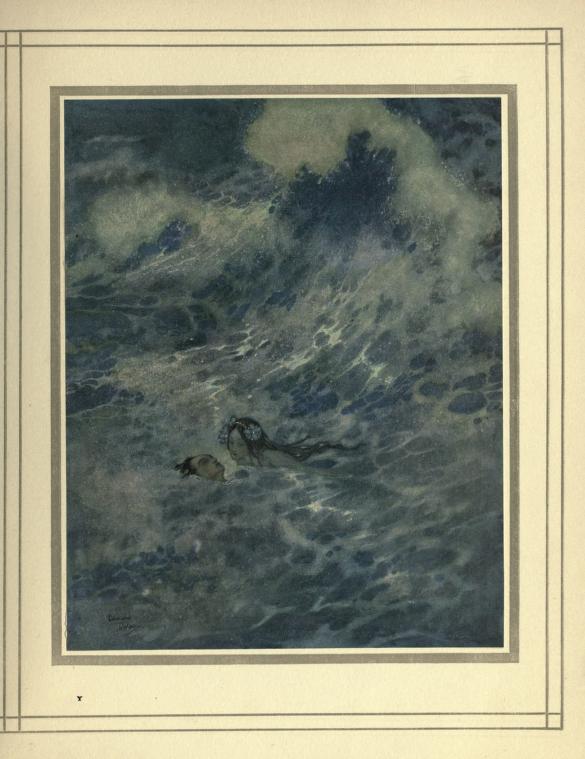
Illustration by Kay Nielsen, from the book Hansel and Gretel and other Stories by the Brothers Grimm

Tuesday, 2 November 2010

Friday, 15 October 2010

Quick Link: Silverweed, the beginning


Just a quick note to say that Chapter 1 part 1 of Dorlana Vann's new YA novel Silverweed is now online. She is serialising this dark new take on Little Red Riding Hood on her blog Supernatural Fairy Tales.

Thursday, 30 September 2010

Lovely things in the post...

I get very excited when lovely things arrive in the post. A few days ago Su Mwamba from Enchanted Times sent me these...


The pictures really don't do these fairy tale newspapers justice. The attention to detail is wonderful, contents include articles like 'Baba Yaga still at large', a supplement on contemporary fairy tale literature, patterns and small ads, and each issue comes with a free gift, like an enchanted needle and thread or pre-enchanted nettle yarn. Su has an Etsy shop and you can find out more about Enchanted Times and read some content online here.

And then yesterday this arrived:


The Wychwood Fairies is the first book by Faye Durston, a good friend who is responsible for the fantastic art direction on Issue 5 of New Fairy Tales, the beautiful picture on our homepage and the banner on this blog.

This is like the Jolly Postman for lovers of stunning illustration and all things faerie—envelopes have letters in them, bits pull out, fairies pop-up. It is a beautiful thing. Again the pictures don't do it justice, you have to have it in your hands to appreciate how good it is.

And look, can you spot the New Fairy Tales picture anywhere?

And if I haven't tempted you enough yet, maybe this will...

Quick Link: new issue of Scheherezade's Bequest

So much to read, so little time, but I will definitely be making time (or stealing some from somewhere) to read the 11th issue of Scheherezade’s Bequest.

Wednesday, 28 July 2010

My Mother She Killed Me, My Father He Ate Me

This is a story about a wonderful looking book that is coming out, and also about why Facebook sometimes makes me happy (I'm a late convert). I only found out about this forthcoming title—due out September 28th—because I saw a post from the Fairy Tale Review Facebook page, which in turn led me to the My Mother She Killed Me, My Father He Ate Me Facebook page, as both journal and book are edited by tireless champion of fairy tales Kate Bernheimer.

The description of the book from the Penguin site says:
The fairy tale lives again in these forty new stories by some of the biggest names in contemporary fiction.

Neil Gaiman, Michael Cunningham, Aimee Bender, Kelly Link, Lydia Millet, and more than thirty other extraordinary writers celebrate fairy tales in this thrilling volume-the ultimate literary costume party.

Spinning houses and talking birds. Whispered secrets and borrowed hope. Here are new stories sewn from old skins, gathered from around the world by visionary editor Kate Bernheimer and inspired by everything from Hans Christian Andersen's "The Snow Queen" and "The Little Match Girl" to Charles Perrault's "Bluebeard" and "Cinderella" to the Brothers Grimm's "Hansel and Gretel" and "Rumpelstiltskin" to fairy tales by Goethe and Calvino.

Fairy tales are our oldest literary tradition, and yet they chart the imaginative frontiers of the twenty-first century as powerfully as they evoke our earliest encounters with literature. This exhilarating collection restores their place in the literary canon.
The title of the book is a line from the Grimms' The Juniper Tree, which is reimagined in the book by Alissa Nutting. Make sure you 'Like' the book's Facebook page as they keep posting up tantalising little tidbits from the tales and links to some great interviews with contributors.

Other fairy tale related Facebook pages I'd recommend are the Cabinet des Fées one, the SurLaLune one and, of course, the New Fairy Tales one.

Saturday, 19 June 2010

There's a new issue of Enchanted Conversation online...

...and it features short stories, poetry and essays inspired by 'The Little Mermaid' and other mermaid, nixy and sea witch tales. I can't wait to settle down to read it!

There are also two contests you can enter, one which asks writers to explore what it would feel like to be a "Daughter of the Air" (as in Andersen's original tale) in a poem or story, and another asking readers to suggest a menu for a mermaid-related meal for the journal's Fairy Tale Food Editor (with a note from Kate Wolford, the Editor, to say they do not mean some type of hideous mer-cannibalism!).

I have a poem called The Blackpool Mermaid in this issue and I should probably explain for readers outside the UK that Blackpool isn't, as its name might suggest, a dark, enchanted pool but a famous Lancashire seaside town (not too far from where I live). Once incredibly popular with holidaymakers, it's been in decline since the mid 20th century but it still has some charms.

As with previous issues of this journal, readers are warmly encouraged to join in and comment. You can enter the Enchanted Conversation here.

Thursday, 20 May 2010

Scheherezade’s Bequest

Issue 10 of Scheherezade’s Bequest is now online at the Cabinet Des Fées website. It's one of my favourite journals and I can't wait to settle down this evening to read it. I am also incredibly excited because I have a story in this issue.

It's a contemporary tale inspired by the opening lines of the Grimms' tale The Raven, in which a mother wishes her fractious baby daughter would become a raven and fly away so that she could get some peace; the girl promptly does. I wanted to see what would happen if the raven couldn't fly away. (In the original tale 'she flew into a dark wood and stayed there a long time, and her parents knew nothing of her'. The tale then follows the adventures of the man who must release the raven girl from the bewitchment.)

Ravens appear frequently in myth, fairy tales and folklore, joining a host of other birds (there's a wonderful article on bird lore by Terri Windling here). I have always been fascinated by tales in which people are transformed into birds. I suppose it's because of the sense of freedom I imagine in flight, although in fairy tales being transformed into a bird is as often an ordeal as it is the form someone chooses.

One thing I was intrigued to find out when I was researching real (as opposed to literary) ravens is that they are playful birds and one of the few species who make their own toys. There's lots more raven info on Wikipedia and you can also hear a raven here (as recorded by naturesongs.com).

Sunday, 16 May 2010

The Beastly Bride

The Beastly Bride: Tales of the Animal People is the fourth anthology in Terri Windling and Ellen Datlow's Mythic Fiction Series. The anthology contains tales and poems of animal-human transformation by writers including Gregory Frost, Jeanine Hall Gailey, Ellen Kushner, Tanith Lee, Delia Sherman and Jane Yolen. You can read the preface to the anthology here.

My copy hasn't arrived yet but I wanted to post about the book now because this week Charles Tan has been interviewing the writers who have contributed to the anthology for SF Signal and Terri Windling has been collecting the links to those interviews here. It's fascinating to be able to read about the creative process the writers went though, and to find out about their inspirations and thoughts on the Beastly Bride concept.

Midori Snyder has also collected together links to the interviews so far and links to a lovely selection of essays in the Journal of Mythic Arts Archives which relate to the subject. Shape Shifters: Art Inspired by Animal-Human Transformation Myths is another treasure from the JoMA site not to be missed and I'd also recommend Marina Warner's essay on animals in fairy tales. And if all that hasn't whetted your appetite enough there are also some reviews up here and here.

Also on Terri Windling's blog this week people from all over the world have been sending in the view from their window. A lot of the people work with fairy tales or in other realms of fantasy and art and it's wonderful to see so many distinctive views (I did send mine in and yes it is a bit grim looking compared to all the rural idylls but I like it anyway!).


The beautiful swan maiden painting in this post is by Romina Perez. You can see more of her work on her blog and website. (The image is used with permission). And if you'd like to find out more about swan maidens there's a wonderful selection of their tales here.

Tuesday, 4 May 2010

Call for submissions - Enchanted Conversation

Enchanted Conversation, is an online fairy tale magazine in Blogger format. They are currently publishing four issues a year, each takes the theme of a traditional tale as its starting point. Submissions are now open for 'The Little Mermaid' issue. They are also happy to look at submissions inspired by other watery tales such as Undine and The Nixy. The deadline is the 15th May and full submission guidelines are available here.

Also not to be missed are the two contests they're running alongside their current 'Beauty and the Beast' issue. One is a writing contest, and for the other you need only join in the conversation and comment on a piece in the issue to be entered.

Illustration by Edmund Dulac, taken from Stories from Hans Andersen (1911) on the Internet Archive.

Monday, 12 April 2010

A feast of fairy tales...

There are so many delicious looking fairy tale treats to feast on this week. The new issue of Goblin Fruit, the fantastical poetry zine, is up. And to celebrate their fourth birthday they're giving away lovely icons, like the one to the left, for you to peruse and use (the icons have been created by Deborah J. Brannon, using Oliver Hunter's gorgeous artwork).

The second issue of Enchanted Conversation has also gone live. It's dedicated to Beauty and the Beast and is packed with retellings, reimaginings and reviews of the tale. I can't wait to dig in!

And, if you're still not full up from all that fairy tale goodness, tomorrow night Heston's Fairytale Feast will air on Channel 4 at 9pm. The pudding sounds good: 'the guests make their way through a wooded glade to find a Hansel and Gretel house made entirely of sweets'. But I'm not so sure about some of the other recipes, which, according to the Radio Times, include 'Snow White-style apples, made from blown sugar piped full of boar mousse' and 'chicken testicles done in the style of jelly beans (with a squid-ink coating).'

Hmmm I think I'll stick to reading the tales...

Addition to post: Here's the programme on YouTube if you didn't catch it. Thanks to redridingtweets for the link.

Friday, 9 April 2010

The instructions you'll need...

... if you ever find yourself in a fairy tale:

The book trailer for Neil Gaiman's forthcoming Instructions, beautifully illustrated by Charles Vess (the direct YouTube link is here).

You can also read the text for the poem in the JoMA archives.

Saturday, 20 February 2010

10 rules

Not strictly fairy tale related, but today's Guardian contains 10 rules for writing fiction by lots of great writers. I wanted to link to it here on the basis that a. some of you may write and so find this interesting, and b. some of the writers who've contributed have done wonderful things with fairy tales.

Here's a little taste of the rules by the fairy tale writers:

Margaret Atwood: 'Don't sit down in the middle of the woods. If you're lost in the plot or blocked, retrace your steps to where you went wrong. Then take the other road. And/or change the person. Change the tense. Change the opening page.'

Neil Gaiman: 'The main rule of writing is that if you do it with enough assurance and confidence, you're allowed to do whatever you like. (That may be a rule for life as well as for writing. But it's definitely true for writing.) So write your story as it needs to be written. Write it ­honestly, and tell it as best you can. I'm not sure that there are any other rules. Not ones that matter.'

Jeanette Winterson: 'Turn up for work. Discipline allows creative freedom. No discipline equals no freedom.'

and I had to end on Philip Pullman who contributed this: 'My main rule is to say no to things like this, which tempt me away from my proper work.'

There are lots of other fantastic writers featured too (including Michael Morpurgo, Michael Moorcock, Annie Proulx, Hilary Mantel—I could go on) so it's well worth a read. The article is available online in two parts:
Part 1
Part 2

Thursday, 14 January 2010

Lots of lovely things to read....

I'm currently battling with essay deadlines so I haven't got the time to present these links in the kind of posts they deserve, but three wonderful looking fairy tale reads have appeared in the last few days:


The new issue of Goblin Fruit, the fantastical poetry zine, which has been guest edited by Mike Allen of Mythic Delirum fame.


The new issue of Scheherezade's Bequest from the brilliant fairy tale journal Cabinet Des Fées.


And the fantastic looking Fairy Tale News New Year's Bumper Edition from Once Upon a Blog.


I can't wait to delve in!
- as soon as I've finished the essays :-(

Sunday, 10 January 2010

Marina Warner on the RSC's Arabian Nights

It's been a fantastic season for fairy tale theatre in the UK, as well as the ubiquitous pantomime there have been many exciting productions drawing on fairy tales and folklore. I've been lucky enough to see two of them - The Library Theatre's Grimm Tales (deliciously dark with a great selection of tales) and En Masse Theatre Company's The Wonderful Wizard of Oz (enjoyable and inventive - the audience all had to don green lensed glasses when Dorothy and friends reached The Emerald Kingdom!).

One other production I would love to see is the RSC's Arabian Nights. Marina Warner wrote an article about it in yesterday's Guardian. She reviews the production and she also gives us some fascinating tidbits of the history of the Nights on stage, here's just a taste:
'In the theatre especially, the sheer abundance of the plots of the Nights opened up possibilities: the book presented magical twists and turns that intrinsically lent themselves to high-spirited performance and to technical experiment. The history of the Nights on the stage is consequently intertwined with some brilliant early stagecraft for transformation scenes, flying machines, conjuring illusions, innovatory limelight and other effects (in Islington in the 1890s, the genies in Aladdin were called after the new gases, Paraffin, Benzoline and Colza).'
The Arabian Nights is on at the RSC's Courtyard Theatre until the 30th January. And although the glut of seasonal fairy tale shows has now nearly passed there is Andersen's English to look forward to - a new production by Out of Joint, written by novelist Sebastian Barry:
'Celebrated children's writer Hans Christian Andersen arrives, unannounced, for a stay at Gad's Hill Place in the Kent marshes - home to Charles Dickens and his large, charismatic family.

To the lonely and eccentric guest, the members of Dicken's household seem to live a life of unreachable bliss. But with his broken English, Andersen doesn't at first see the tensions in the family: undeclared passions, a son sent to serve in India, and a growing strangeness at the heart of Dickens's marriage.'
This should be interesting, especially as the relationship between the two writers soured after this visit. The production will be touring in Spring 2010.

(ps - If you follow the link to the Guardian to read Marina Warner's article I'd also recommend Margaret Atwood's plea for birds, which made me think of her beautiful essay 'Of Souls as Birds' in Mirror, Mirror on the Wall, in which she explored her love of fairy tales in which people are transformed into birds)

Tuesday, 5 January 2010

The Fairy Tale Project

Just came across this intriguing fairy tale project, in which each artist is contributing a paragraph and an illustration to the story before it is passed along to someone else. The story takes a new turn with each contributor and there are some lovely illustrations - definitely one to follow.

Enchanted Conversation - The Sleeping Beauty Issue


Enchanted Conversation is a new blogazine dedicated to fairy tales. Each of the quarterly issues will be dedicated to a particular fairy tale and feature an eclectic mix of fiction, poetry, articles, essays, art and reviews.

In The Sleeping Beauty Issue there's lots to enjoy, including recipes to feed a castle full of people who've just woken up from a 100 year sleep (A Royal Awakening), the real bad fairy confesses - and it isn't the one you'd expect (The Twelfth Fairy Confesses), one princess is starved of stories (Apathy), and another questions the fairy tale ending (Happily Ever After), we learn about Steampunk + Fairy Tales and there's much, much more.

The issue also looks beautiful, I love the way editor Kate Wolford has included a mix of classic and contemporary illustration, along with fabulous etsy buys.

The magazine is based on a blog to encourage participation, readers are encouraged to comment on the contents and enter the conversation about the featured tale, there are contests you can enter too.

The next issue will be focused on Beauty and the Beast and you can find the submissions info here.

Sunday, 20 December 2009

What happened to Cinderella?

There was a new Cinderella story in yesterday's Guardian by Man Booker prize winner Hilary Mantel, with lovely illustrations by Posy Simmonds.


'Cinderella in Autumn' is an intriguing look at life for Cinderella 20 years after the wedding. The story is shot through with references to our times - Cinderella is stalked by paparazzi, her remaining stepsister is hoping the Tories get in, and the prince runs a scheme for young people involving white water rafting that 'brings out your potential and fits you for a destiny'. And we discover that the Prince has always had more of a relationship with her shoes than with Cinderella herself: 'She would see him, in absent moments, caressing the glass heel, which would seem to grow higher under his fingertips.'

I'm not going to say too much more because it's a good read, and I don't want to spoil it, but I do like the way Mantel has used the story to comment on our fame obsessed culture and the depressing fact that, for some girls, marrying a prince (or sleeping with a golfer) might still be thought of as the best route to happiness.

Saturday, 7 November 2009

AS Byatt reviews Maria Tatar

A quick link to a review I very happily discovered on opening this morning's Guardian:
Enchanted Hunters: the Power of Stories in Childhood by Maria Tatar

'This is a grown-up book for grown-up people who haven't forgotten being childhood readers. It satisfies imagination and curiosity, revisiting things you suddenly remember clearly, telling you new things you didn't know.'

Although, as Byatt says, the book is 'not about classic fairytales but about authored children's writing' there are mentions of Andersen and the Grimms, as well as Peter Pan and The Wizard of Oz - which are often considered to be fairy tale like - alongside many other important children's classics. This is a study of 'what children take and need from stories, and how this is not always what parents imagine'.

I can't wait to read the book, and what a treat to read a review of Tatar by Byatt!

Friday, 16 October 2009

Must reads -The Guardian, 'Great fairytales' (part 7)

Today is the last in the Guardian's 'Great fairytales' series and the theme is 'Beastly Tales'. There's a fantastic afterword by Marina Warner which looks at the role of animals in fairy tales, I'm going to use an excerpt of it as a foreword here as I think it also serves as a good introduction to the different kinds of animal tales that feature in today's booklet:

'The anthropologist Claude Lévi-Strauss commented that animals were "bons à penser" (good to think with), and fairytales speak through beasts to explore common experiences – fear of sexual intimacy, terror and violence and injustice, struggles for survival. A tradition of articulate, anthropomorphised creatures of every kind is as old as literature itself: animal fables and beast fairytales are found in ancient Egypt and Greece and India, and the legendary Aesop of the classics has his storytelling counterparts all over the world, who use crows and ants, lions and monkeys, ravens and donkeys to satirise the follies and vices of human beings and display along the way the effervescent cunning and high spirits of the fairytale genre.

By contrast with animal fables, where something of an animal's observable, actual character helps make the point (monkeys are clever, sharks, well, shark-like, in The Heart of a Monkey from Zanzibar), the beast of fairytale romance comes in fantasy shape – mythological creatures such as a dragon, a snake, a yellow dwarf, or, as AS Byatt translates one such beast, Mme d'Aulnoy's "Le Serpentin vert", as a "great green worm". They belong in a world of romance and psychology rather than satire and practical wisdom.'

Today's first tale is Beauty and the Beast by Jeanne-Marie Le Prince de Beaumont (this link is to a French site which as well as a biography also contains a reproduction of the original text), first published in 1756 in France and 1757 in England, this is usually referred to as an abridgement of the first literary version of the tale by Gabrielle-Suzanne Barbot de Villeneuve. There's an excellent article by Terri Windling about the writers of literary fairy tales in France available online in the JOMA archives which I'd highly recommend if you'd like to find out more about these tales.

Also included in today's booklet are the tales; Hans My Hedgehog by the Brothers Grimm and translated by champion of fairy tales and children's literature Jack Zipes; and The Heart of a Monkey as retold by Andrew Lang from the Lilac Fairy Book.

The illustrations are today provided by Eleanor Davis (the one I've featured above is taken from The Beauty and the Beast) and once again I can't stress enough just how much better represented they are in the paper booklet; my favourite illustration from today is of the forlorn Beast, hunched over an image of Beauty; but you can only see it on the cover of the paper booklet, they've not included it online. If you've missed the paper booklets this week they are all available to buy online here.

I thought I would also give the credits for the whole of this brilliant series here, as they are featured inside the booklets but not anywhere that I could find online:

Editor: Lisa Allardice
Assistant editor: Ginny Hooker
Research: Stephanie Cross
Series editor: Philip Oltermann
Subeditor: Christian Sadler
Art Director: Gavin Brammall
Picture editor: Rachel Vere
Production: Russel Turk (part 1, part 2, part 3), Steve Coady (part 4, part 5, part 6, part 7),
Production editor: Amy Thompson

You can read my other posts on the series here:
Part 1, Part 2, Part 3, Part 4, Part 5 and Part 6